Categories
Flood Insurance

Rising Waters, Rising Risk: What Every MidwestHomeowner Should Know About Flood Insurance

If you’ve lived in Ohio or Indiana for more than a few years — whether in Lewisburg, Eaton, Preble County, or just across the line in Richmond, IN — you’ve probably noticed something: the storms feel different lately. What used to be a “heavy spring rain” now sometimes turns into a creek overflowing into a backyard, a basement filling with water overnight, or a road turning into a river within hours.

You’re not imagining it. And it’s exactly why more Midwest homeowners are starting to ask the same question: “Do I actually need flood insurance?”

“But I Have Homeowners Insurance…”

Here’s the part that catches people off guard: standard homeowners insurance does not cover flooding.

Your homeowners policy may cover a pipe that bursts inside your home, or even water damage from a sudden sump pump failure (if you have that endorsement — see our Comprehensive Guide to Water Backup Insurance Coverage). But if water rises from the outside — from a swollen river, an overwhelmed storm drain, or runoff from saturated farmland nearby — that’s classified as a flood, and it’s a completely separate type of coverage.

This is one of the most common and costly misunderstandings in home insurance, and it’s why so many homeowners find out the hard way, standing in a flooded basement holding a homeowners policy that won’t help them. If you’re not sure exactly what your current policy includes, our post on whether homeowners are missing important insurance protections is a great place to start.

What Does Flood Insurance Actually Cover?

A flood insurance policy is typically split into two parts:

Building Property Coverage

  • The structure of your home itself — foundation, walls, electrical and plumbing systems, furnace, water heater, and built-in appliances
  • Flooring, drywall, and insulation
  • Attached structures like garages

Personal Contents Coverage

  • Furniture, clothing, and personal belongings
  • Major appliances (washer, dryer, refrigerator, etc.)
  • Curtains, rugs, and portable items

It’s worth noting: most flood policies do not automatically cover finished basements (think: drywall, carpeting, or furniture in a finished lower level), so if you’ve put time and money into finishing your basement, this is something we should talk through specifically.

Why Is This Becoming a Bigger Deal in the Midwest?

For decades, flood insurance felt like something “other people” needed — folks living near major rivers or coastlines. That’s changing — even for homeowners well outside Lewisburg and the surrounding Preble County area.

Climate data shows the Midwest has experienced a measurable increase in heavy rainfall events over the past several decades. Storms are dropping more rain in shorter windows of time, and that means:

  • Storm drains and municipal systems get overwhelmed faster than they were designed for
  • Soil saturates more quickly, leading to runoff even on properties that have never flooded before
  • “100-year flood” zones are shifting — meaning homes outside the traditional flood map boundaries are seeing water for the first time

This is the part that surprises people most: a large percentage of flood insurance claims come from homes outside of designated high-risk flood zones. You can check your home’s flood zone status using FEMA’s FloodSmart.gov tool — but just because your home isn’t in a mapped floodplain doesn’t mean you’re not at risk. It just may mean your risk hasn’t been recently reassessed.

What This Means for You

If any of the following sound familiar, it’s worth having a conversation about flood coverage:

✅ You’ve noticed more water in your yard, driveway, or near your foundation after storms than you used to

✅ Your neighborhood has experienced any street flooding, even briefly

✅ You have a finished basement or store valuables below ground level

✅ You live near a creek, retention pond, or low-lying area — even a small one

✅ You’ve simply never looked into it because “that’s not something that happens here”

The good news? Flood insurance is often more affordable than people expect — especially when you get ahead of it rather than purchasing it after water is already in your basement. Most NFIP policies also have a 30-day waiting period before coverage takes effect, so this isn’t something to put off until a storm is already forecasted. (And if you’re reassessing your home’s overall coverage anyway, take a look at our 10 Tips for Choosing the Right Property Insurance Policy in Ohio)

Frequently Asked Questions

Does homeowners insurance cover flood damage in Ohio?

No. Standard homeowners insurance policies in Ohio and Indiana specifically exclude damage caused by flooding — water that enters your home from the outside due to rising rivers, overflowing storm drains, or heavy runoff. Flood coverage must be purchased as a separate policy, typically through the National Flood Insurance Program (NFIP) or a private flood carrier.

How much does flood insurance cost?

Cost varies based on your home’s elevation, flood zone designation, age, and construction, as well as the amount of coverage you choose. Many homeowners are surprised to find that flood insurance costs less than they expected, especially for homes outside high-risk flood zones. The best way to know your actual cost is to get a personalized quote.

Is my home at risk if it’s not in a flood zone?

Yes, it can be. A significant share of flood insurance claims nationwide come from properties located outside of FEMA-designated high-risk flood zones. Changing rainfall patterns mean flood maps don’t always reflect current risk, particularly in areas that have seen new development, increased impervious surfaces, or recent changes in drainage patterns.

How long until my flood insurance policy takes effect?

Most flood insurance policies, including those through the NFIP, have a standard 30-day waiting period before coverage becomes active (with some exceptions, such as policies obtained in connection with a mortgage closing). This makes it important to get coverage in place well before storm season rather than waiting until a storm is on the forecast.

We’re Here to Help You Sort It Out

Insurance can feel overwhelming, especially when it comes to figuring out what’s covered, what’s not, and what actually makes sense for your home and budget. That’s where we come in.

At Taylor & Associates Insurance Agency, Ltd., we’ll take a look at your current homeowners policy, talk through your property’s specific risk factors, and help you understand your real options — no pressure, no jargon, just straight answers.

Give us a call or stop by — we’re happy to walk through it with you.

Phone: 937-962-2123

Website: www.TaylorAGY.com

Address: 221 N Commerce ST, Lewisburg, OH 45338

Because the best time to think about flood insurance is before you need it.

Categories
Watercraft and Boat Insurance Auto Insurance motorcycle insurance

From the Open Road to Open Water: Taylor & Associates Has You Covered

Summer is just around the corner, and for many of us, that means one thing — adventure. Whether you’re firing up the motorcycle for a weekend ride, hitching up the travel trailer for a family camping trip, or launching the boat for a day on the lake, there’s nothing quite like the freedom of getting out and enjoying the great outdoors.

But here’s the thing about adventure: it comes with risk. And the last thing you want is for an unexpected accident, theft, or weather event to put the brakes on your fun — or worse, leave you with a major financial headache.

That’s where we come in.

We Insure the Way You Play

At Taylor & Associates Insurance Agency, Ltd., we specialize in recreational vehicle coverage for the full spectrum of outdoor enthusiasts. Here’s a look at what we protect:

Motorcycles

Whether you ride a touring bike, a cruiser, or a sport bike, your motorcycle deserves proper coverage. Our motorcycle insurance can cover collision, comprehensive, liability, and even gear and accessories — so you can ride with confidence.

Golf Carts

Golf carts aren’t just for the course anymore. Many neighborhoods, resorts, and retirement communities rely on them for everyday transportation. If your cart is stolen, damaged in an accident, or causes injury to someone else, the right policy makes all the difference.

Boats

From fishing boats to pontoons to ski boats, we offer boat insurance that covers physical damage, liability, and even on-water towing. Whether you’re on a lake, river, or reservoir, you can enjoy every cast and every wake-up call knowing you’re protected.

Personal Watercraft

Jet skis and personal watercraft are exhilarating — and they carry real liability exposure. Our personal watercraft policies cover bodily injury, property damage, and collision so you can make those big splashes worry-free.

Motor Homes

Your motor home is part vehicle, part vacation home. That means it needs coverage that goes beyond a standard auto policy. We offer comprehensive motor home insurance that protects you whether you’re parked at a campground or cruising down the interstate.

Campers & Travel Trailers

Travel trailers and campers represent a significant investment — and they’re exposed to road hazards, weather, and theft every time you tow them. We’ll make sure your rig is covered from hitch to hitch.

Why Recreational Vehicle Insurance Matters

A lot of people assume their homeowner’s or auto policy covers their recreational vehicles. In most cases, it doesn’t — or coverage is so limited it won’t come close to making you whole after a serious loss.

Dedicated recreational vehicle insurance fills those gaps. It’s designed specifically for how these vehicles are used, stored, and valued. And because we work with multiple carriers, we can shop the market to find you the best coverage at the best price.

Ready to Hit the Road, Water, or Trail?

Don’t wait until something goes wrong. Whether you’re gearing up for the season or you’ve been riding, boating, or camping without proper coverage for years, now is the perfect time to get a quote.

Contact Taylor & Associates Insurance Agency, Ltd. today.

 📞 937-962-2123
🌐 www.TaylorAGY.com

Adventure freely. We’ve got you covered.

Categories
Watercraft and Boat Insurance

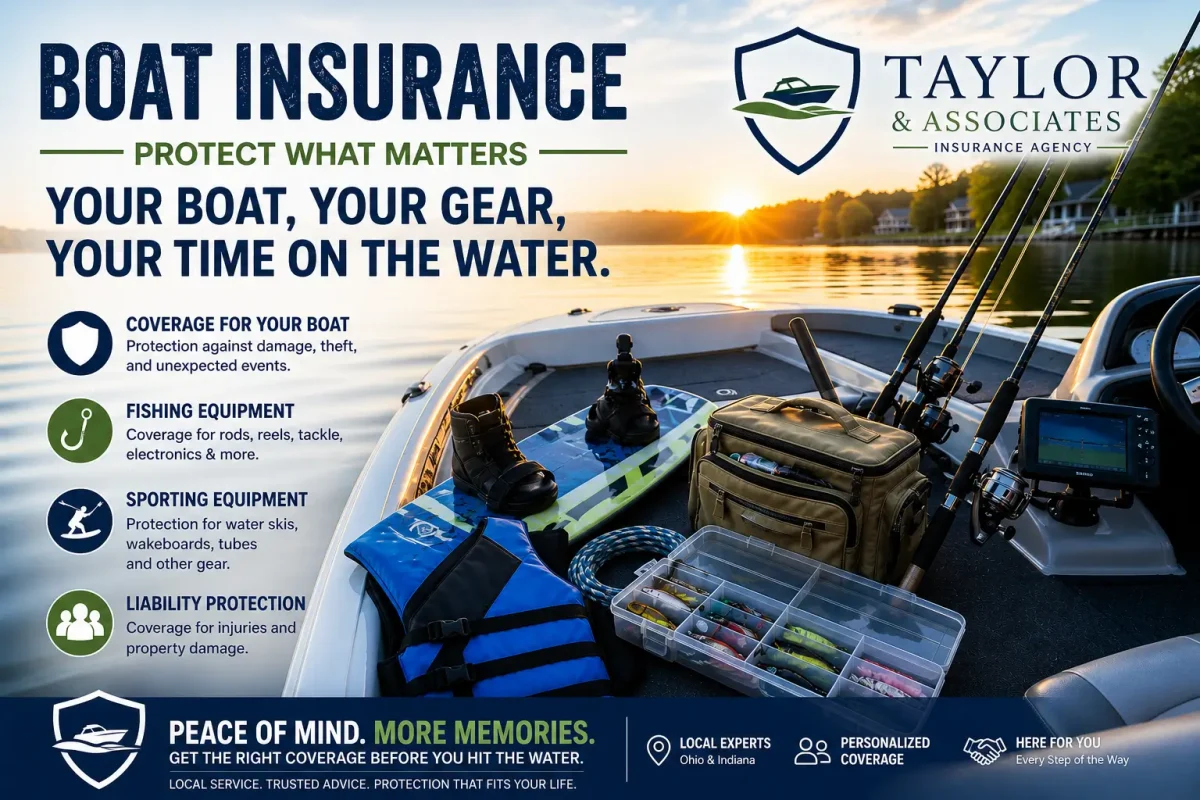
Boat Insurance in Ohio & Indiana: Protect Your Boat, Gear, and Time on the Water

Why Boat Insurance Matters More Than You Think

Owning a boat is about freedom—early mornings on the lake, weekends with family, and time spent doing what you love. But without proper protection, one accident, storm, or theft could turn that investment into a major financial setback.

Boat insurance isn’t just a “nice-to-have”—it’s a smart way to protect your boat, your passengers, and your valuable equipment.

What Does Boat Insurance Cover?

A well-structured boat insurance policy can cover much more than just the vessel itself. Depending on your coverage, protection may include:

1. Physical Damage Coverage

Covers repair or replacement if your boat is damaged by:

  • Collisions 
  • Storms and weather events 
  • Fire 
  • Vandalism 

2. Liability Protection

If you’re responsible for injury to someone else or damage to their property, liability coverage helps cover:

  • Medical expenses 
  • Legal fees 
  • Property damage 

3. Uninsured/Underinsured Boater Coverage

Protects you if you’re hit by someone who doesn’t carry enough insurance.

Coverage for Fishing Equipment and Sporting Gear

One of the most overlooked parts of boat insurance is protection for what’s on the boat.

Many policies can be customized to include coverage for:

🎣 Fishing Equipment

  • Rods and reels 
  • Tackle boxes and lures 
  • Fish finders and onboard electronics 

🏄 Sporting Equipment

  • Water skis 
  • Wakeboards 
  • Tubes and towable gear 

If you enjoy fishing or water sports, this type of coverage is essential. High-end gear can add up quickly—and standard policies may limit or exclude it unless specifically added.

Common Risks Boat Owners Face

Even experienced boaters run into unexpected situations:

  • Sudden storms on lakes and rivers 
  • Docking accidents 
  • Theft of equipment or the boat itself 
  • Damage during transport or storage 

Having the right insurance in place ensures you’re not left paying out of pocket.

Is Boat Insurance Required in Ohio or Indiana?

Boat insurance is not always legally required in Ohio or Indiana, but many marinas and lenders do require it. More importantly, going without coverage puts your finances at serious risk.

How to Choose the Right Boat Insurance Policy

Not all policies are created equal. When reviewing your coverage, make sure to consider:

  • Agreed Value vs. Actual Cash Value vs. Total Loss Replacement
  • Navigation limits (where you’re covered) 
  • Coverage for personal property and gear 
  • Deductibles and liability limits 

A local, independent insurance agency can help tailor a policy that fits how you actually use your boat.

Final Thoughts: Protect the Boat—and Everything That Comes With It

Boat ownership is about making memories—not worrying about what could go wrong. The right insurance policy protects not just your boat, but your investment in fishing equipment, sporting gear, and the lifestyle that comes with it.

If you’re unsure whether your current policy fully covers your needs, it may be time for a quick review.

Need Help with Boat Insurance in Ohio or Indiana?

At Taylor & Associates Insurance Agency, we help boat owners find coverage that fits their lifestyle—whether you’re a weekend cruiser, serious angler, or water sports enthusiast.

Reach out today for a no-pressure review and make sure you’re fully protected before your next trip on the water.

Categories
Life Insurance

Life Insurance Options for Seniors

Practical, family-first guidance to help seniors and their loved ones choose the right coverage

Planning for the costs that come after life is an act of care. For many seniors, the right life insurance policy covers funeral and medical bills, protects a spouse or partner, and preserves a legacy for children or a favorite local charity. Below we walk through the life insurance options most commonly available to older adults, explain which situations each serves best, and give warm, practical tips for working with a trusted local agent to find the right fit for your family.

Common life insurance types seniors will encounter

There are several different policy types insurers sell to older adults. Traditional categories include term life (time-limited coverage), whole life (permanent coverage with guaranteed cash value), and universal or indexed universal life (permanent coverage with flexible premiums or interest-crediting features). Many states’ consumer guides group these same basic types and their key features to help shoppers compare apples to apples. (aldoi.gov)

For seniors specifically, two permanent-policy varieties are especially common: simplified-issue whole life and guaranteed-issue (also called guaranteed acceptance or final-expense) whole life. Simplified-issue policies ask a few health questions but usually skip a medical exam; guaranteed-issue requires no health questions and is designed for applicants who can’t qualify for medically underwritten coverage. These final-expense products are intended to cover funeral, burial, small medical bills, and short-term debts. (fmiagent.com)

Who each option is best for

Term life: Best when a senior’s goal is to protect a surviving spouse or co-signer against a specific liability (for example, a remaining mortgage or a co-signed loan) for a limited time. Because term is time-limited, it’s less often chosen as a stand-alone solution by older buyers unless a short-term risk exists. (aldoi.gov)

Whole life (traditional): Best for seniors who want a permanent death benefit, guaranteed premiums, and predictable cash-value growth. Whole life generally costs more than term but provides lifetime protection when premiums are paid. (webce.com)

Simplified-issue final-expense: A good middle ground for seniors with moderate health issues who want quick approval without a paramedical exam. These policies typically provide modest death benefits—enough for funeral costs and small debts—and come with higher per-dollar costs than fully underwritten coverage. (fmiagent.com)

Guaranteed-issue/final-expense: Ideal when serious health problems make other coverage impossible. These policies guarantee acceptance but often carry higher premiums, lower maximum benefits, and sometimes graded benefits or short waiting periods before the full death benefit is payable. That trade-off makes them a sensible last-resort choice for many families. (forbes.com)

How to choose: three questions to guide your decision

Ask yourself (or ask your agent) three simple questions: 1) What exactly do I want the policy to pay for (funeral, mortgage, debts, caregiver costs, or legacy)? 2) What is my health profile and will I qualify for preferred or standard rates? 3) What can my monthly budget sustain over time? Answering those will narrow choices quickly—if you need only a modest amount for final expenses, a small guaranteed-issue whole life policy may be enough; if you’re healthy and want more protection at a lower monthly cost per dollar, a medically underwritten whole or term policy could be better. Trusted consumer guides recommend matching the policy to the specific need, not buying the most coverage the insurer will sell. (content.naic.org)

Questions every senior (and family) should ask an agent

When you speak with an independent local agent, ask them to: explain whether the product is graded or immediate (does the full death benefit pay from day one?); show a one-page cost comparison for alternatives; confirm exactly which activities or conditions are excluded; and outline how premium payments can be made (bank draft, credit card, or fixed-pay options). An independent agent with community roots can often compare multiple companies and find the best combination of price, stability, and customer service—so give local options first consideration. (content.naic.org)

Safeguards: spotting red flags and staying safe

Seniors are a frequent target for aggressive or misleading sales tactics. Avoid high-pressure “sign today” pitches, offers that seem too small a payment for an outsized promise, or agents who discourage talking with family or a lawyer. State insurance departments and consumer-protection agencies publish alerts about predatory practices and can confirm whether a salesperson or firm is licensed in your state. If something feels off, pause the sale and call your state Department of Insurance or the Federal Trade Commission for guidance. (insurance.ca.gov)

Final thoughts — practical next steps

Start with a short list of objectives (cover funeral costs, replace lost Social Security income for a surviving spouse, or leave a small legacy). Then book a conversation with a trusted local, independent agent who can show side‑by‑side quotes for simplified-issue, guaranteed-issue, and any underwritten options available to you. Keep documentation of offers and read policy illustrations together with a family member if possible. Purchasing life insurance later in life is often about balancing peace of mind and affordability—done thoughtfully, it’s a final act of protection the whole family can appreciate. (content.naic.org)

Our Family Serving Yours — If you’d like a local, no-pressure review of options tailored to your situation, call Taylor & Associates Insurance Agency. Our team in Lewisburg has served families since 1982 and can walk you through choices, costs, and the paperwork so your plan matches what matters most.

Categories
Property Insurance

10 Tips for Choosing the Right Property Insurance Policy in Ohio

How to Protect Your Home, Business, and Peace of Mind — Without Coverage Gaps

Choosing the right property insurance policy in Ohio shouldn’t feel overwhelming. Whether you’re protecting your Lewisburg home, a rental property, or a small business storefront, the right coverage makes the difference between a smooth recovery and a financial setback.

At Taylor & Associates Insurance Agency, we help families and business owners across Lewisburg, Centerville, Richmond and the surrounding Ohio and Indiana communities compare multiple carriers to find coverage that truly fits — not a one-size-fits-all policy.

Here are 10 practical tips to help you choose wisely.


1. Understand What a Standard Property Insurance Policy Covers

Most homeowners insurance policies include:

  • Dwelling coverage (your home structure)
  • Other structures (garage, shed, barn, pool, fence)
  • Personal property
  • Liability protection
  • Additional living expenses (ALE)

Knowing these categories helps you identify where you may need higher limits or endorsements — especially if you have high-value items, a home office, or rental activity.


2. Replacement Cost vs. Actual Cash Value — Know the Difference

This is one of the biggest claim surprises.

  • Replacement Cost = Pays to replace items new (no depreciation).
  • Actual Cash Value (ACV) = Replacement cost minus depreciation.

If you want to rebuild your home at today’s construction costs or replace electronics and furniture without a large out-of-pocket gap, replacement cost coverage is typically the better option.


3. Insure to Rebuild Cost — Not Market Value

Your home’s market value includes land and neighborhood demand. Insurance is based on reconstruction cost — materials and labor to rebuild your home.

If your dwelling limit is too low, you may pay the difference after a major loss.

In the Midwest, rebuilding costs have fluctuated due to labor and material increases. It’s critical to review your dwelling limits annually.


4. Create a Home Inventory Before You Need It

A home inventory makes claims faster and smoother.

Document:

  • Photos of each room (or video)
  • Receipts
  • Serial numbers
  • Estimated values

For small business owners, inventory documentation is even more critical for equipment and stock claims.


5. Choose a Deductible You Can Actually Afford

A higher deductible lowers your premium — but only if you can comfortably pay it after a loss.

We often recommend reviewing:

  • 1% vs 2% deductibles as these can be very expensive
  • Wind/hail deductibles (sometimes different than your standard deductible)
  • Actually quote two deductible to help decide if the savings associated with the higher deductible is worth while

6. Compare Coverage — Not Just Price

The cheapest policy often has:

  • Lower limits
  • More exclusions
  • Restricted endorsements

Review how your policy handles:

  • Sewer backup
  • Identity theft
  • Equipment Breakdown
  • Mold
  • Code upgrades (ordinance or law coverage)
  • Jewelry and collectibles limits

When shopping for insurance, make sure you consider the cost of the options included in your quote. Not all insurance agencies are the same, many don’t quote the options that you may need or want for your protection. Find out what is included, or better yet, what was not included. 


7. Don’t Overlook Liability Protection

If someone slips on your driveway or is injured at your home, liability coverage protects your assets.

Consider higher limits if you:

  • Host gatherings frequently
  • Have a pool
  • Own rental property
  • Run a home-based business

An umbrella policy adds another layer of protection and is surprisingly affordable.


8. Consider Local Risk Factors in Ohio

Where you live affects your coverage needs.

In Ohio and Indiana, we regularly evaluate:

  • Wind and hail exposure
  • Tornado risks
  • Sewer backup potential
  • Flood zone status (flood requires separate coverage)

A local independent agent understands these regional risks and helps tailor Taylor protection accordingly.


9. Small Businesses & Rentals Need Specialized Coverage

A homeowner policy does NOT cover most business property or liability.

If you:

  • Run a business from home
  • Own rental property
  • Have a storefront
  • Store inventory on-site

You likely need a Business Owner’s Policy (BOP) or commercial property policy.

This is one of the most common coverage gaps we find during policy reviews. Many of these gaps can be easily filled with low-cost insurance options that will not break the budget. Make sure your agent knows about your needs.


10. Review Your Policy Every Year

Life changes.
Renovations.
New valuables.
Business growth.
Inflation.

An annual review ensures your coverage keeps pace with your life.

As an independent agency, we shop multiple carriers to balance price, coverage, and service — so you’re protected when it matters most.


Why Work With a Local Independent Insurance Agency?

At Taylor & Associates Insurance Agency, LTD, we are:

  • Family-owned
  • Independent (multiple carriers)
  • Local to the community
  • Focused on long-term relationships

We don’t just sell policies.
We help protect families.

From our family to yours — protect what matters most.


Call to Action

📍 Serving Lewisburg, Englewood, Centerville, Richmond and surrounding Indiana and Ohio communities
📞 Call today for a no-pressure property insurance review
📧 Or request a free coverage comparison

Let’s make sure your home or business is properly protected.

Categories
Life Insurance

The Tax Benefits of Life Insurance You Didn’t Know About (And How Families Can Use Them)

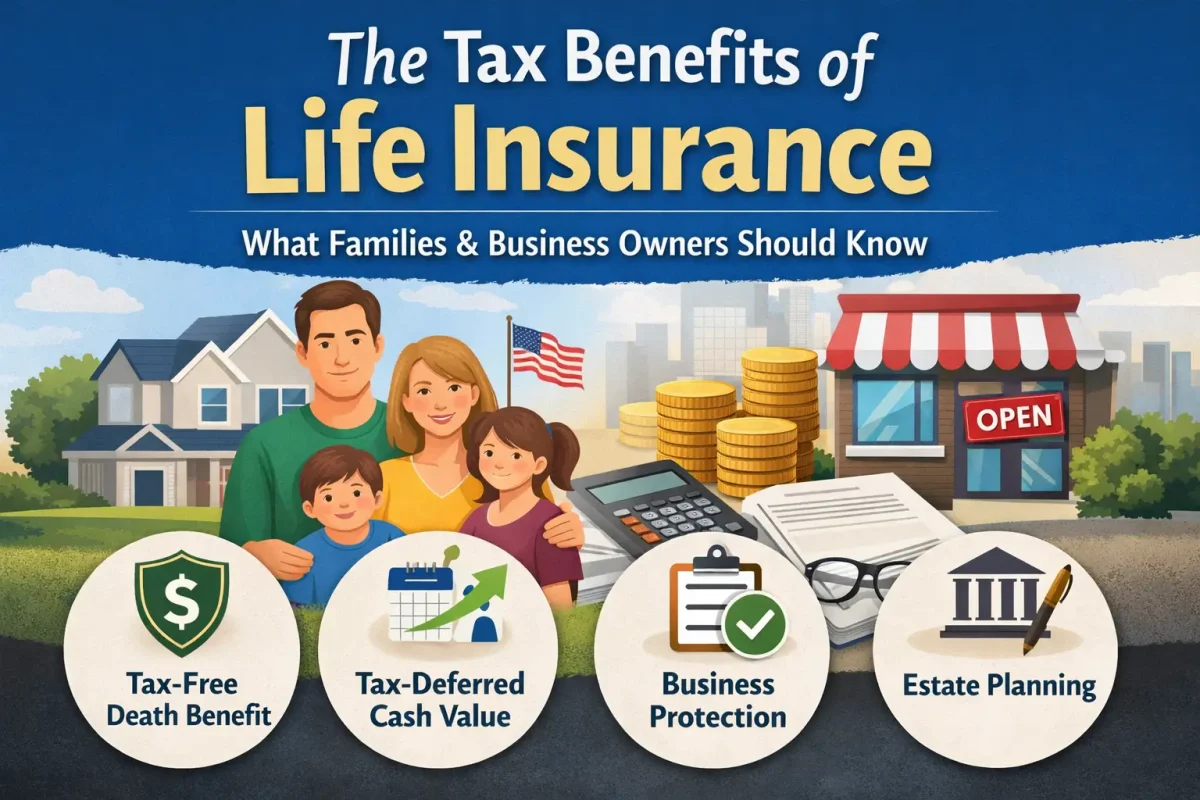
The Tax Benefits of Life Insurance You Didn’t Know About

Life insurance is often thought of as a simple promise: financial protection for your loved ones if something happens to you. But what many families and small-business owners don’t realize is that life insurance can also offer powerful tax advantages when structured correctly.

From tax-free death benefits to tax-deferred cash value growth and strategic estate planning, life insurance can play a meaningful role in both financial protection and long-term planning. Here’s what most people overlook — and what to watch out for.

How Life Insurance Fits Into Your Tax Picture

The most well-known benefit is also one of the most important: life insurance death benefits are generally received income-tax-free by beneficiaries. That means the money your family receives is not reduced by federal income taxes in most cases.

Depending on the type of policy — term life, whole life, or universal life — there may also be tax advantages while you’re still living, including tax-deferred growth and access to funds.

1. Tax-Free Death Benefits Provide Immediate Financial Relief

Life insurance proceeds are typically not considered taxable income, allowing beneficiaries to use the full amount for:

  • Replacing lost income
  • Paying off a mortgage
  • Covering final expenses
  • Funding a child’s education

This makes life insurance one of the most efficient ways to transfer wealth and provide liquidity during an emotionally difficult time.

2. Tax-Deferred Cash Value Growth in Permanent Life Insurance

Permanent life insurance policies — such as whole life or universal life — build cash value that grows tax-deferred. As long as the funds remain inside the policy, the growth is not taxed.

Policyowners can often access this cash value through policy loans, which are generally not treated as taxable income if the policy stays in force. This feature can provide flexibility for:

  • Emergency expenses
  • Business opportunities
  • Supplemental retirement income

⚠️ Important note: If a policy lapses or becomes a Modified Endowment Contract (MEC), taxes may apply.

3. Modified Endowment Contracts (MECs): A Common Tax Pitfall

If too much premium is paid into a policy too quickly, the IRS may classify it as a Modified Endowment Contract. Once a policy becomes a MEC:

  • Withdrawals are taxed on gains first
  • Early withdrawals (before age 59½) may face penalties
  • The MEC status is permanent

Proper policy design and premium timing are essential to preserving tax advantages.

4. Accelerated Death Benefits for Illness — Often Tax-Free

Many modern life insurance policies include accelerated death benefit riders, allowing access to a portion of the death benefit if the insured becomes terminally or chronically ill.

In many cases, these benefits are excluded from taxable income, helping families cover medical costs or daily living expenses without additional tax burden.

5. Life Insurance for Small Businesses: Key Person & Buy-Sell Planning

Life insurance is widely used in business planning too:

  • Fund buy-sell agreements
  • Protect against the loss of a key employee
  • Provide cash flow during ownership transitions

While premiums are usually not tax-deductible, death benefits paid to the business are generally received tax-free, depending on structure and ownership.

6. Estate Planning and Life Insurance Trusts (ILITs)

Although life insurance death benefits are income-tax-free, they may still be included in your taxable estate if you own the policy at death.

An Irrevocable Life Insurance Trust (ILIT) can remove the policy from your estate, but timing matters. Transferring an existing policy and passing away within three years can pull the proceeds back into your estate under IRS rules.

Practical Next Steps for Families and Business Owners

To make sure your life insurance is working as efficiently as possible:

  1. Review your existing policies and beneficiaries
  2. Confirm policy ownership and cash value details
  3. Check for outstanding loans or MEC risks
  4. Coordinate planning with your agent and tax advisor

Life insurance works best as part of a coordinated financial plan, not in isolation.

Final Thoughts: Life Insurance as a Tax-Smart Planning Tool

Life insurance isn’t just about protection — it’s a flexible financial tool that can support families and businesses through every stage of life. The key is choosing the right policy, funding it properly, and understanding the tax rules that apply.

A local, knowledgeable agent can help you navigate these options and avoid costly mistakes.

Ready for a life insurance checkup?
Contact Taylor & Associates Insurance Agency for a personalized review and clear guidance tailored to your family or business.

937-962-2123

info@tayloragy.com

Categories
Auto Insurance

Understanding Comprehensive Car Insurance

What comprehensive coverage really is — and why a local agent matters

Comprehensive car insurance is the protection that steps in when damage to your vehicle comes from something other than a crash you caused. It helps pay to repair or replace your car after events like theft, vandalism, fire, certain weather events, falling objects, or striking an animal. This “other than collision” coverage is optional for most drivers but can be essential for protecting your finances and peace of mind. (geico.com)

Comprehensive vs. collision: not the same thing

People often lump comprehensive and collision together as “full coverage,” but they cover different risks. Collision pays for repairs after a crash with another vehicle or object (including single-vehicle accidents), while comprehensive covers non-collision events that are outside your control — like a tree limb crushing the roof or a hailstorm totaling your sedan. Knowing the difference helps you choose the right mix of protection for your car’s value and your budget. (forbes.com)

Everyday examples that show when comprehensive applies

Imagine waking up to find your car windows smashed by vandals, or returning to a parking spot where your vehicle has been stolen. Picture driving through a late-summer storm and discovering significant hail dents, or hitting a deer at dusk on a rural road. These are the kinds of losses comprehensive is designed to handle — situations where the damage didn’t come from a collision with another vehicle but still puts you out repair costs or a total loss. (compare.com)

When your lender or lease requires comprehensive

If you’re still paying a car loan or leasing your vehicle, the lender or leasing company will usually require you to carry comprehensive (and collision) coverage. That requirement protects the lender’s financial interest by making sure the car can be repaired or replaced after covered damage. Once a loan is paid off, many drivers reevaluate whether to keep comprehensive based on the car’s current market value. (cluballiance.aaa.com)

How deductibles and actual cash value (ACV) affect your claim

Comprehensive coverage has a deductible — the portion you pay out of pocket before your insurer pays the remainder. If the repair cost is close to or less than your deductible, it’s often more economical to pay for repairs yourself. If your vehicle is declared a total loss, comprehensive typically pays up to the vehicle’s actual cash value (ACV), which factors in depreciation, not what you originally paid. Understanding your deductible and how ACV is calculated will help you decide the right deductible level and whether to keep the coverage at all. (insure.com)

Is comprehensive worth the cost? Practical guidance for families and small business owners

There’s no one-size-fits-all answer. If your car is newer or would be expensive to replace, comprehensive is usually a smart safety net. If you park on the street in an area with frequent break-ins or hail, comprehensive protects you from those everyday hazards. For older vehicles with low market value, the annual premium plus deductible may outweigh the likely payout; in that case, many owners drop comprehensive and budget for occasional repairs instead. A trusted local agent can run the numbers with you and show the break-even point for your specific vehicle and neighborhood risk.

How claims affect your premium and what to consider before filing

Comprehensive claims often stem from events outside your control, and insurers may view them differently from at-fault collision claims. In many cases a single comprehensive claim has a smaller effect on your rates than a collision claim, but frequent claims or certain claim types can still change your premium. Before filing, check whether the claim amount after your deductible justifies the potential for higher future premiums. Your independent local agent can walk through the expected short-term and long-term impacts. (insurance.com)

Smart choices that keep coverage effective and affordable

Choose a deductible you can afford to pay after a covered loss; a higher deductible usually means a lower premium, but not if you can’t cover it when you need to. Ask about glass-only or zero-deductible glass options if windshield damage is a common issue in your area. Bundle auto with homeowners or other policies for potential discounts, and ask your agent about safety-device discounts or mileage-based options if you drive less than average. Local driving patterns, weather, and theft rates all influence the best choice — which is why working with a neighborhood agent who knows your town matters.

Questions to ask your agent during a coverage review

When you sit down with a local independent agent, consider asking: What events are explicitly covered or excluded under comprehensive? How is ACV calculated after a total loss? What deductible options are available and how do they change my premium? If I’ve modified my vehicle, what endorsements are needed to cover custom parts? Are there discounts for bundling, safety features, or low mileage? These questions help tailor coverage to your needs without paying for protection you don’t need.

Real-case thinking: a family’s decision checklist

Picture a two-car family that lives in a hail-prone area and parks one vehicle in the driveway and one in the garage. For them, keeping comprehensive on both cars makes sense because storm damage is likely and repair costs can exceed annual premiums quickly. Conversely, a commuter with a 15-year-old paid-off vehicle used only for short trips with minimal theft or weather exposure may save money by dropping comprehensive and setting aside a repair fund. A local agent can create a side-by-side cost projection so you can compare scenarios tailored to your household.

Why choose a local independent agent — and how Taylor & Associates helps

Choosing coverage is as much about trust and local knowledge as it is about price. At Taylor & Associates Insurance Agency, our family-run team draws on decades of experience helping Ohio families and small businesses choose the protections that fit their lives. We don’t push one-size-fits-all solutions. Instead, we review your vehicle’s value, where you park, driving habits, and your tolerance for out-of-pocket costs — then recommend options that balance protection and affordability. If you prefer an independent agent who treats you like a neighbor rather than a number, we’re here to help. Our Family Serving Yours.

Next steps — a simple plan to protect what matters

Start with a quick policy check: confirm whether you currently have comprehensive, note your deductible, and ask your agent how ACV would be determined today. If you don’t have comprehensive, ask for a tailored quote and a short scenario analysis that shows the break-even point for keeping or dropping coverage. If you do have it, review deductible options and glass endorsements, and talk to your agent about local factors (theft, weather, deer crossings) that could change your risk profile.

Ready to talk? Contact your local Taylor & Associates independent agent for a free, no-pressure review and personalized quote. We’ll walk through the numbers with you, explain trade-offs in plain language, and help you decide what’s right for your family or small business. Our Family Serving Yours — protect what matters most today.

Categories
Life Insurance

Life Insurance for Parents: How to Protect Your Children’s Financial Future

Life Insurance for Parents: How to Protect Your Children’s Financial Future

As a parent, ensuring your children’s well-being and financial security is a top priority. One of the most effective ways to safeguard their future is through life insurance for parents and families. Parents’ life insurance offers peace of mind, knowing that your children will be cared for, even in your absence.

Understanding Life Insurance for Parents: A Simple Guide

Life insurance is a contract between you and an insurance company, where you pay regular premiums in exchange for a lump-sum payment, known as a death benefit, to your beneficiaries upon your passing. This benefit can cover various expenses, ensuring your children’s financial stability.

Types of Life Insurance Policies for Parents

  • Term Life Insurance for parents: Provides coverage for a specific period, such as 10, 20, or 30 years. It’s generally more affordable and straightforward, making it suitable for parents seeking coverage during their children’s formative years.
  • Whole Life Insurance for parents: Offers lifelong coverage with a cash value component that grows over time. This type can serve as both a protection tool and a savings vehicle for future needs.

Key Benefits of Life Insurance for Parents

1. Financial Security for Your Children

The primary purpose of parents getting life insurance is to provide a financial safety net. In the event of your untimely death, the death benefit can cover daily living expenses, education costs, and other essential needs, ensuring your children maintain their standard of living.

2. Debt Settlement

Life insurance proceeds can be used to pay off outstanding debts, such as mortgages, car loans, or credit card balances. This prevents your children from inheriting financial burdens and allows them to focus on their future without added stress.

3. Funding Education Expenses

Education is a significant investment. Life insurance can help ensure that funds are available for your children’s schooling, from primary education to college tuition, even if you’re not there to provide for them.

4. Covering End-of-Life Expenses

Funeral and burial costs can be substantial. A life insurance policy can alleviate the financial strain of these expenses, allowing your family to grieve without added financial concerns.

Special Considerations for Parents of Children with Special Needs

Parents of children with disabilities face unique challenges. It’s crucial to plan meticulously to ensure your child’s long-term care and financial support.

Establishing a Special Needs Trust

Instead of naming your child as a direct beneficiary, consider setting up a special needs trust. This legal arrangement allows you to allocate funds for your child’s care without jeopardizing their eligibility for government assistance programs like Supplemental Security Income (SSI) or Medicaid. The trust can manage and distribute funds according to your wishes, providing for medical care, education, and other necessities.

When Should Parents Purchase Life Insurance

The ideal time to buy life insurance is as early as possible. Premiums are generally lower when you’re younger and healthier. Additionally, securing a policy early ensures that coverage is in place during your children’s most dependent years.

Choosing the Right Coverage Amount

Determining the appropriate coverage amount depends on various factors, including your income, debts, lifestyle, and future expenses. A common guideline is to aim for a death benefit that is 10 to 15 times your annual income. However, it’s essential to assess your family’s specific needs and consult with a financial advisor to tailor the coverage accordingly.

Life Insurance for Parents-Frequently Asked Questions (FAQ)

How much life insurance should parents have? 10-15x income lever is generally accepted rule for the average parent. 

Is term or whole life better for parents? That depends on the situation. Younger parents can benefit from the generally longer lasting coverage of whole life. At the same time, term insurance is generally less expensive and therefore easier to provide larger death benefits.

Should both parents have life insurance? Generally, yes, parents should not only consider the replacement of lost income but also consider providing for caregiving expenses. 

Conclusion

Life insurance is a vital component of a comprehensive financial plan for parents. It ensures that your children are protected and provided for, regardless of life’s uncertainties. By understanding the different types of policies and their benefits, you can make informed decisions that align with your family’s needs and aspirations.

Protect your family with the right life insurance. Every family’s situation is different. A local, independent insurance advisor can help you compare options and choose coverage that truly fits your needs. 

Parents, take the first step today to secure your children’s future. Consult with a trusted insurance advisor at Taylor & Associates to explore your options and find a policy that offers the protection and peace of mind your family deserves.

Call us: 937-962-2123

Email: info@tayloragy.com

Quick Quote form: https://www.tayloragy.com/life-insurance-quote/

Website: https://www.tayloragy.com

Categories
Home Insurance

Are Homeowners Missing Important Insurance Protections

What Every Homeowner Should Know

Taylor & Associates Insurance Agency, LTD

From our family to yours

Are Homeowners Missing Important Insurance Protections?

In a changing risk landscape, simply having a standard homeowners insurance policy may not be enough to fully protect your family’s most valuable asset—your home. According to the 2025 Homeowners Coverage Awareness Report, many U.S. homeowners are aware of additional coverages, but far fewer actually carry them.

Coverage Awareness vs. Coverage Reality

Recent research highlights a significant gap between what homeowners know and what they actually purchase:

• Most homeowners are aware of umbrella insurance, but only a small percentage carry it.
• Valuables coverage is widely recognized, yet rarely added.
• Recreational vehicles are commonly owned, but often uninsured or underinsured.
• Cyber insurance awareness and adoption remain extremely low.

Why These Gaps Matter

Standard homeowners insurance policies have limits and exclusions that many people don’t discover until after a loss occurs. Jewelry, collectibles, electronics, and sports equipment often require additional coverage. At the same time, cyber threats such as identity theft and digital fraud are becoming more common, creating new risks that traditional policies were never designed to address.

How an Independent Agent Helps

Working with an independent insurance agent ensures your coverage keeps pace with your life. We take time to understand what you own, how you live, and what risks matter most to you.

An independent agent helps by:

• Identifying coverage gaps before a loss happens
• Explaining options in plain language
• Comparing coverage across multiple carriers
• Focusing on protection and peace of mind—not just price

The Bottom Line

Your home deserves more than a one-size-fits-all insurance policy. Additional protections such as umbrella liability, scheduled valuables coverage, and cyber insurance can make a meaningful difference when the unexpected happens.


Need a homeowners insurance review?

At Taylor & Associates Insurance Agency, LTD, we help homeowners understand their coverage and make informed decisions. Contact us today for a personalized homeowners insurance review.  https://www.tayloragy.com/homeowners-insurance-quote/

Categories
Homeowners Insurance

Renters and Property Insurance: What You Need to Know

Renting a home or apartment offers flexibility and convenience, but it also comes with responsibilities—one of which is ensuring your personal belongings and liabilities are adequately protected. While your landlord’s insurance covers the building’s structure, it doesn’t extend to your personal property or liability. This is where renters insurance becomes essential.

Understanding Renters Insurance

Renters insurance is a policy designed specifically for tenants, providing coverage for personal belongings, liability protection, and additional living expenses in case your rental becomes uninhabitable due to a covered event. Unlike homeowners insurance, which covers the building itself, renters insurance focuses solely on the tenant’s needs.

Key Coverages of Renters Insurance

  1. Personal Property Protection: This covers your belongings—such as furniture, electronics, and clothing—against perils like fire, theft, and vandalism. It’s important to note that high-value items like jewelry or art may require additional coverage. (kiplinger.com)
  2. Liability Coverage: If someone is injured in your rental unit or you accidentally cause damage to someone else’s property, liability coverage can help pay for legal expenses and damages. (elocal.com)
  3. Additional Living Expenses (ALE): If a covered event renders your rental uninhabitable, ALE coverage can help pay for temporary housing and other related expenses. (lemonade.com)

Common Misconceptions About Renters Insurance

  • “My Landlord’s Insurance Covers Me”: This is a common misunderstanding. A landlord’s policy typically covers the building’s structure but not the tenant’s personal belongings or liability. (cbsnews.com)
  • “Renters Insurance Is Expensive”: In reality, renters insurance is quite affordable. The average premium is around $15-20 per month, making it a cost-effective way to protect your assets. Additionally, there may be a discount applied to your auto insurance if you purchase renter’s insurance with the same carrier. 

How to Choose the Right Renters Insurance Policy

  1. Assess Your Coverage Needs: Take an inventory of your belongings to determine the amount of coverage you require. Keep in mind the cost new of your belongings and the urgency of getting replacement items now instead of waiting for a good sale price.
  2. Understand Policy Limits and Exclusions: Be aware of what is and isn’t covered. For instance, standard policies exclude flood damage and typically don’t include things like water backup, equipment breakdown or earthquake damage, which may require additional coverage.
  3. Compare Quotes: Let your independent agent shop around and compare policies from different insurers to find the best coverage at a reasonable price. Remember: there could be a discount on your auto insurance if you acquire renters coverage from the same carrier. 

Conclusion

Renters insurance is a vital safeguard for tenants, offering protection for personal property, liability, and additional living expenses. Understanding the scope of coverage and selecting the right policy can provide peace of mind and financial security in the face of unexpected events. Don’t wait for a disaster to realize the importance of renters insurance—take proactive steps to protect yourself and your belongings today.